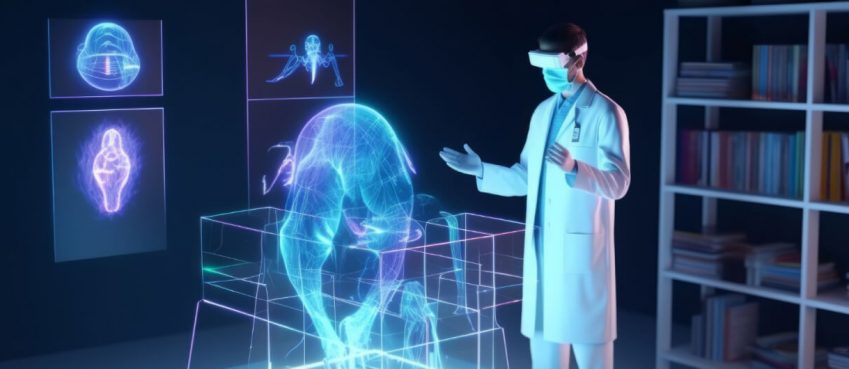
How AI Video Generation Tools Are Transforming Scientific Communication & Research Visualization

How AI Video Generation Tools Are Transforming Scientific Communication And Research Visualization


by Neeraj Gupta — 4 weeks ago in Artificial Intelligence 6 min. read
988

Scholarly investigations frequently remain confined within lengthy documents. They also appear in unmoving graphics and presentation sequences. These formats typically engage only a limited group of people. A significant challenge for many scientists is conveying intricate discoveries. This communication needs to be both precise and easy to grasp. Established ways of sharing knowledge, such as published articles, conference displays, or spoken presentations, demand considerable effort. They also necessitate skill in visual arrangement and investment of means. Consequently, the spread and influence of scientific breakthroughs face restrictions.

AI video generation tools enter the scene. These instruments employ sophisticated generative designs. They change basic research information numbers and written stories into captivating videos. This makes sharing scientific discoveries more visual. It also makes it more interesting and easier to spread widely. For those who study things, scientists and business owners, this represents a significant change.

In this article, we explore how AI video generation tools are reshaping research visualization, breaking down the technical, practical, and ethical dimensions, and why it matters now.

What Exactly Are AI Video Generation Tools in the Context of Science?

Sophisticated programs now exist. These systems employ intelligent algorithms. They skillfully transform information into moving pictures. This process occurs without manual intervention. Consider scientific exploration. Researchers can utilize these advancements. They can convert intricate ideas into clear presentations. Experimental outcomes become readily understandable. Visual information is also made more accessible. What’s more, these tools craft compelling explanations.

Definition and Core Capabilities

Artificial intelligence tools now create videos. These systems understand various starting points. They can take written descriptions or complex data. Even visual diagrams can be used. The AI then transforms these into moving pictures with narration. This process can produce visual plans for a story. It can also create spoken explanations. Furthermore, it can generate informational graphics. Even symbolic images can be formed. All of this happens without direct human effort for each element.

Their core capabilities often include:

  • Automatic script generation from research abstracts or paper content.
  • Data visualization, such as chart animation or 3D model rendering.
  • Narration, either via AI voice or avatar-based talking heads.
  • Scene and storyboard generation, enabling logical flow from introduction → methodology → results → conclusion.
  • Customization, so researchers can apply academic templates, domain-specific styles, or institutional branding.

For example, ModelScope AI uses diffusion-based networks to convert English text into coherent video sequences, supporting temporal consistency and motion.

Similarly, Mootion’s AI Academic Video Studio allows researchers to upload lecture notes or papers, then automatically structures a video presentation with visuals and narration.

Also read: Spotify User? Guide To Cancel Spotify Premium Subscription

Why Researchers and Scientists Struggle With Traditional Scientific Communication

Scholars frequently present new findings through lengthy documents and unchanged pictures. These methods sometimes miss the full wonder or feeling of breakthroughs. Experts find it challenging to transform complex information into stories. These stories should connect with people outside of university settings.

The Barriers of Static Visualization

  • Traditional research outputs rely heavily on static graphs and figures, which can be difficult for non-experts to interpret.
  • Tools like ParaView and Drishti do powerful 3D visualizations, but they require highly specialized skills and are not optimized for narrative storytelling.
  • Without animation or voice, many visualizations fail to convey temporal dynamics, such as patterns evolving over time.

Time, Skill & Resource Constraints

  • Producing a well-designed research video manually takes weeks: scripting, designing visuals, recording voice-overs, editing, and polishing.
  • Most researchers don’t have the design or video-editing experience. Hiring professionals is expensive, and DIY video production distracts from core research work.

Limited Reach and Engagement

  • Even when research is published, engagement is often limited to fellow specialists.
  • Busy stakeholders, funders, policymakers, and industry partners may not engage with dense academic text.
  • Static slides or posters at conferences may not fully capture the narrative journey of discovery.
Also read: What Is Freely? A TV Streaming Platform Backed By BBC, ITV, Channel 4 and Channel 5

Practical Use Cases of AI Video Generation in Scientific Research

AI video generation tools are being used across research fields to simplify complex concepts and visualize experiments in real time. Scientists use them to create video abstracts, animate molecular structures, simulate lab results, or present data trends visually.

Conference Presentations and Video Abstracts

  • Researchers can turn key findings into video abstracts, short, polished summaries that can accompany journal submissions or be shared on social media.
  • Video abstracts can increase reach, engagement, and even citation potential.
  • Platforms like Reelmind.ai and Mootion support this workflow, offering templates built for academic-style storytelling.

Teaching, Lectures, and Course Content

  • Professors and educators can transform lecture notes or syllabus content into on-demand videos, making their courses more accessible and flexible.
  • AI tools let them animate abstract theories, adding voice narration and 3D visuals for better comprehension.
  • These video modules can be reused, enabling efficient content creation for blended or online learning environments.

Public Outreach and Science Communication

  • Non-specialist audiences (e.g., policymakers, the general public) benefit from visually rich, narrated videos rather than dense academic prose.
  • Institutions of higher learning and scientific inquiry may leverage films produced by artificial intelligence or instructional clips to showcase their breakthroughs. For example, Motion’s Research Documentary Maker possesses the capability to transform scholarly writings into compelling stories suitable for public broadcast.
  • Furthermore, through the medium of moving pictures, intricate subjects such as global climate shifts, the study of genes, or the principles of quantum mechanics transform into relatable and comprehensible concepts.

Institutional Branding and Collaboration

  • Academic organizations can create consistent messaging. They achieve this by employing specialized artificial intelligence systems. These systems learn from the organization’s visual standards and favored ways of presenting information.
  • Research teams can work together effectively. One team might conduct the study. Another team then utilizes smart computer programs to create a video. A communications office can then share this video. This process happens without needing to hire a complete video production crew.
  • Furthermore, some systems allow for the sharing of these smart programs. Researchers can then offer specialized programs for their particular fields. For instance, a program for brain studies or for studying new materials could be shared. Reelmind.ai offers a central place for this kind of sharing called a Model Hub.
Also read: Apple CarPlay Not Working? Here’s 7 Troubleshooting Tips

Challenges, Risks, and Limitations

Artificial intelligence video creation methods offer new ways to present scientific discoveries. However, certain difficulties accompany these advancements. Precision and the trustworthiness of information may falter. This occurs when the computer programs misunderstand scientific images. It can also happen if they make research outcomes seem simpler than they truly are.

Risk of Misinterpretation or Oversimplification

  • When complex scientific data is translated into video, there’s a risk that nuance gets lost. Oversimplified animations may mislead non-experts.
  • Researchers must carefully review generated content and refine prompts to maintain scientific rigor.

Ethical and Authenticity Concerns

  • AI-generated narration or avatars might lack the authority or authenticity of a researcher speaking.
  • There may be issues around attribution: who “owns” the AI-generated video? The researcher, the platform, or both?
  • Transparency about AI usage is essential; viewers should know when AI was used in production.

Technical and Infrastructure Barriers

  • High-quality AI video generation may require computational resources (e.g., GPUs) or paid subscriptions.
  • Custom model training (for domain-specific data) may demand data, expertise, and time.
  • There is a learning curve: researchers may need to learn how to write effective prompts, refine scripts, or validate generated visuals.
Also read: How To Download YouTube Vanced APK + Best Alternatives

Future Outlook: What’s Next for AI-Driven Research Visualization

Researchers anticipate a future where artificial intelligence significantly enhances how scientific discoveries are shown. Generative AI tools will play a larger role. Augmented reality will also become more common. Furthermore, real-time simulation capabilities will be deeply woven into the process. Soon, scientists will possess the ability to build entirely interactive visual representations. These models will dynamically change as fresh information becomes available.

Real-Time, Interactive Visualizations

  • Emerging AI models may allow live data integration, enabling real-time visualizations for webinars or lectures.
  • Imagine a researcher presenting with a video dashboard that updates in real time as new data flows in, all generated by AI.

Human-AI Co-Creation of Research Narratives

  • The most powerful future model is co-creation: researchers guide the narrative, and AI executes the visual realization.
  • Multi-agent frameworks, such as VideoAgent, will allow richer customization and user control over narrative arcs.
  • AI feedback loops may let creators refine generated content iteratively.

Democratization and Wider Adoption

  • As AI video tools become more accessible, more labs,  including underfunded ones, will use them for outreach and communication.
  • Shared model marketplaces (domain-specific model hubs) will grow, improving quality for niche disciplines.
  • Funding agencies and journals might start requiring or accepting video abstracts, accelerating adoption.
Also read: Novel AI Review: Is It The Best Story Writing AI Tool? (2024 Guide)

Conclusion

Artificial intelligence tools for creating videos are now a reality. These systems are changing how science is shared and how research is shown. They turn raw information into compelling stories. This helps scientists overcome common challenges. They often struggle with limited time. Many also lack design experience. Furthermore, their work may not reach many people.

It is important to understand that AI is not meant to replace scientists. Instead, it serves to enhance human imagination and knowledge. The future of science communication involves working together. Scientists will guide what the message is. AI will then handle the visual creation.

Frequently Asked Questions (FAQs)

How accurate are videos produced by AI video generation tools for scientific data?

AI tools can animate charts, but accuracy depends on the quality of input data and how well prompts are crafted for data visualization.

Can I use AI video generation tools to make video abstracts for my research paper?

Yes — many platforms support research-to-video pipelines, allowing researchers to convert abstracts and key findings into short, polished video summaries.

Do AI-based science communication tools support 3D visualization of molecular or volumetric data?

Indeed. Some tools can render 3D models and animate them, making molecular structures or volumetric scans visually accessible.

What are the ethical concerns associated with using AI for research video generation?

Key ethical concerns include attribution (who owns the video), transparency (disclosing AI use), and the risk of oversimplification or misrepresentation of scientific data.

Is it possible to train a custom AI model for domain-specific research videos?

Yes. Advanced platforms allow researchers to train and fine-tune AI models on specialized datasets (e.g., medical imaging, climate data), improving visual accuracy and consistency.

Neeraj Gupta

Neeraj is a Content Strategist at The Next Tech. He writes to help social professionals learn and be aware of the latest in the social sphere. He received a Bachelor’s Degree in Technology and is currently helping his brother in the family business. When he is not working, he’s travelling and exploring new cult.

Subscribe
Notify of
guest
0 Comments
Inline Feedbacks
View all comments

Copyright © 2018 – The Next Tech. All Rights Reserved.