

8 Latest Trends Transforming Digital Printing Technology In 2026

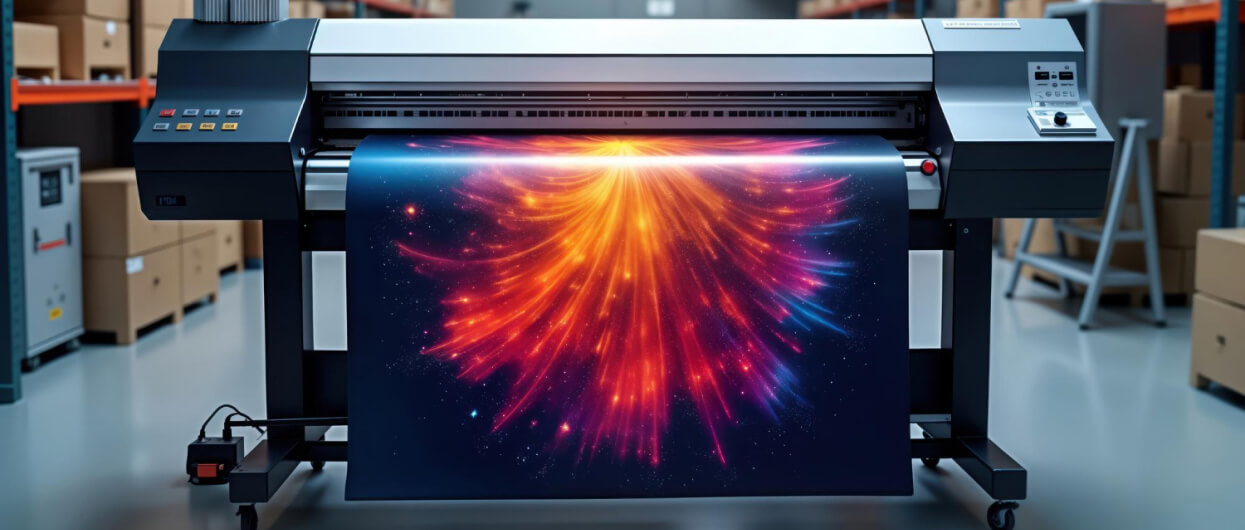
The advertising and packaging fields are changing in 2026, driven by evolving consumer demand, increased sustainability awareness, and rapidly changing trade routes. Companies will have to adapt to stay relevant and profitable.
Digital printing is at the heart of this transformation. Understanding what the latest trends in digital printing technology are will help business leaders navigate this transitional period. While taking advantage of some innovations requires investing in an entirely new setup, implementation may be as easy as setting up a novel software solution. Here are eight emerging trends in digital printing.
Flexible packaging includes products such as pouches, bags, and wrappers. Besides offering durability, many manufacturers appreciate that these options are often less expensive to make than their rigid counterparts. Production also becomes more accessible thanks to specialized printers made for this packaging category.
For example, the revolutionary J Press FP790 from Fujifilm generated significant buzz at the 2024 Digital Packaging Summit due to its notable production qualities. It is a water-based digital inkjet press made for the flexible packaging market. This model caters to industrial users due to features including its impressive printing speed, print quality, and color variety. Users can expect high-quality prints and results that adhere to the food and beverage industry’s tight regulatory requirements.
Although other industries use flexible packaging, too, it is especially popular for consumable items because of how well it protects the contents from light, oxyge,n and moisture. Those safeguards preserve taste and quality, reinforcing brands’ reputations.
Artificial intelligence has penetrated virtually every field. In 2026, it will reach digital printing. AI-powered inline quality control systems can inspect print quality, catching streaks, splotches, faded colors, and blurriness in real time.
An emerging application is predictive maintenance, which businesses can use to prevent failures as soon as the first indicators of an issue appear. Its primary focus is on minimizing downtime for printers. For example, if it forecasts toner depletion, it can automatically trigger a supply order when the level approaches a predetermined threshold, preventing a critical shortage.
Since this technology is proactive, it prevents downtime and also maintains optimal performance. For example, it can detect anomalies in toner levels and fuser temperatures and intervene before productivity declines.
Also read: Top 10 Trending Technologies You should know about it for Future DaysPrinting on demand is made possible by digital inkjet printing, e-commerce platform integration, and high-speed technologies. It enables companies to produce the exact quantity of packaging they need, precisely when they need it. It helps brands react quickly to market changes, seasonal promotions, and campaign backlash without committing to large print runs.
For professions relying on digital printing, such as packaging, this trend could be transformative. In addition to producing products as quickly and frequently as needed, users can create an impression with custom packaging. This technology enables short-run printing for events, special promotions, or holidays. It is highly time and cost-efficient, so companies can keep up during periods of heightened demand.
This approach also facilitates just-in-time manufacturing, reducing inventory costs and shortening lead times. Since companies no longer have to store preprinted materials, they gain valuable floor space, enabling them to expand operations.
Inks developed with petroleum-based solvents are durable, inexpensive, and long-lasting, making them a popular choice for commercial printing. However, they produce significant emissions of volatile organic compounds, which are detrimental to the environment and pose health risks to machine operators.
Driven by the push for sustainability and the need for vibrant, high-quality prints, an increasing number of organizations are seeking alternative formulations. There is a growing use of water, soy, algae, and vegetable-based inks, pigments, and substrates. Some produce no carbon dioxide during production and even remove carbon from the atmosphere.
Water-based ink has become the eco-friendly ink of choice for consumer goods companies seeking an alternative to solvent-based products. Although it is not a new concept, it has advanced significantly in recent years. Ultraviolet (UV) curable ink is in a similar situation. By relying on light-emitting diodes (LEDs) rather than mercury-vapor lamps, UV-LED printers are more sustainable.
Also read: 10 Best AI Image Enhancer & Upscaler Tools (100% Working)Moving from hand-operated presses to offset printing was a revolutionary development. Since then, digitalization has made waves. The machines may only change in size and shape incrementally, but massive changes are underway. Engineers are working diligently to streamline workflows and push the limits of printing speeds.
While digital printers are already considerably faster than offset printing presses, emerging technologies will help them achieve unparalleled speeds. Ultra-high-speed models with nonstop print capabilities are designed for high-volume production in commercial packaging and advertising, and publication applications.
Modern digital inkjet printers equipped with high-capacity toner systems can print at a rate of 50 pages per minute (ppm). Some can achieve over 100 ppm without sacrificing quality thanks to their broad CMYK color gamut and ultra-precise, highly uniform dots. Automation and data management software help close the gaps, further improving print speed and quality.
Variable data printing allows businesses to make content on printed pieces, including labels, cartons, and boxes, unique without stopping the press. Each one can have different images, barcodes, or text.
Companies can incorporate this technology into their workflow as a software application that runs on the print controller. It focuses on print data itself, customizing packaging as needed within a single print run.
Depending on the application, operators can use it for personalization or anticounterfeiting. Personalization will become increasingly important as more consumers seek businesses that tailor their customer experiences. Anticounterfeiting is already among the top concerns of many industry leaders, given that food fraud has increased considerably in recent years.
Also read: New Bethesda’s Fallout 5: Is It Coming Or Not? AnsweredAugmented reality (AR) is one of the latest digital printing technology trends. It overlays three-dimensional, computer-generated graphics onto real-world environments via a mobile device, linking print and digital media. Consumers can scan a trigger to render flat images, animated graphics, or interactive presentations in real time.
The interactive content provides consumers with a reason to engage with products on shelves. Since it captures their attention longer than traditional labels, it influences purchasing decisions. Moreover, the interaction can position brands as innovative or tech-forward.
Typically, AR content is seen on signage, flyers, or brochures. However, it is expected to break into the food and beverage industry in 2026. Digital printers can place two-dimensional triggers, such as markers or QR codes, on the label, allowing consumers to interact with them. For example, they can view a behind-the-scenes video of the winemaking process or see a cereal box mascot brought to life.
Direct-to-object printing eliminates the need for labels by printing directly onto 3D objects via precision inkjet heads. These machines can apply full-color graphics to textured, curved, or uneven surfaces, including cardboard cartons, aluminum cans, and glass bottles. They can produce content in both human and machine-readable formats. The durable finish will hold up during transportation and storage.
By rendering label application systems and printing plates redundant, this technology saves businesses time and money. It also opens the door for more flexible printing applications by enabling high-quality printing in a broader variety of shapes and materials, including custom containers. It facilitates high-quality, short-run, and just-in-time production.
Replacing labels would be a considerable cost and time-saver for consumer goods manufacturers. In addition to lowering printing costs, it could accelerate prototyping and increase storage space availability. If facilities use food-edible ink, they could even print directly onto food items, creating novel marketing and branding opportunities.
Also read: Explained: Most Popular Sanrio Characters Across The World + (Fun Facts!)Digital printing capabilities are evolving. Professionals are going beyond dot uniformity and color vibrancy to consider novel features, such as AI integration. Whether facilities struggle with slow print speeds, clogged print heads, or unsustainable operations, they can look to forward-thinking commercial printer manufacturers for the solution.
With 2025 coming to a close, industry leaders are asking themselves where to go from here. Following the latest trends in digital printing technology is a sound strategy. Whether companies utilize the latest eco-friendly printing technology or switch to sustainable ink formulations, the change will have a positive impact.
Tuesday August 12, 2025
Friday July 4, 2025
Thursday June 12, 2025
Tuesday June 10, 2025
Wednesday May 28, 2025
Monday March 17, 2025
Tuesday March 11, 2025
Wednesday March 5, 2025
Tuesday February 11, 2025
Wednesday January 22, 2025

High-quality market intelligence is precious, fragmented, and often locked..

If your legacy Java application collides with large datasets, batch processing..

Customer support systems are designed to streamline communication, decrease..

Personalised PAT test labels are crucial elements in maintaining compliance and..

In today’s retail environment, in-store execution has become one of the most..

Paid guest posting is commonly positioned as a fast-track solution to enhance..