

5 Technology Advancements That Have Transformed In-Store Retail Execution

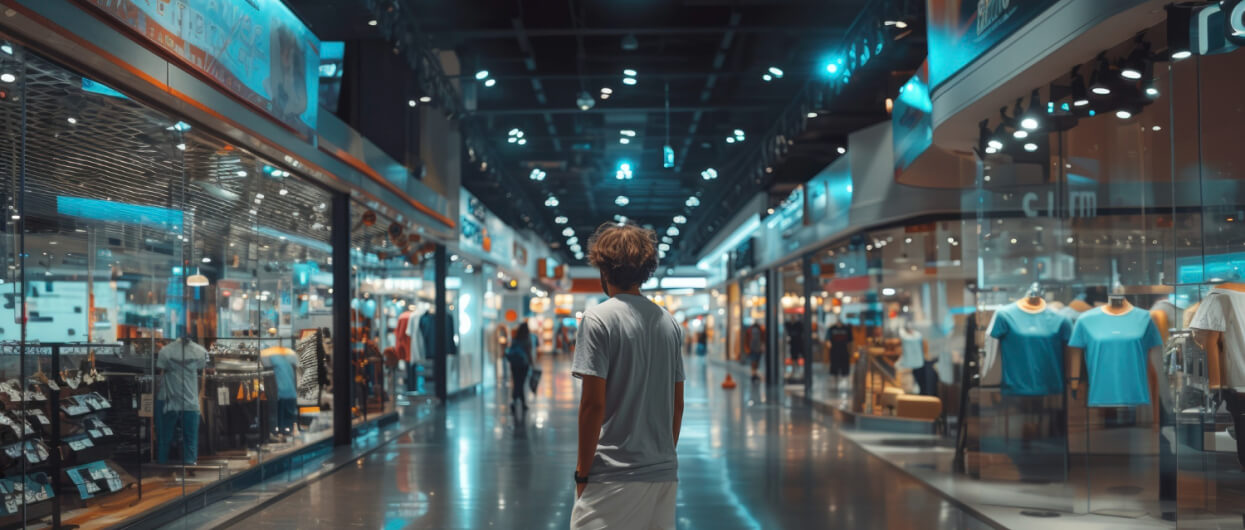
In today’s retail environment, in-store execution has become one of the most high-pressure fronts for brands. Shoppers expect products to be available, displays to be on point, and experiences to feel seamless. Yet, the complexity of managing physical stores has only increased.
To keep pace, retailers need advanced technologies to bring greater visibility and speed to the store floor. To help clarify this matter, we partnered with retail consulting firm Driveline to highlight the advanced technology improving in-store retail execution.
The Internet of Things (IoT) has become a foundational technology for improving how retailers manage and execute in-store operations. In a retail setting, IoT refers to a network of small, interconnected devices embedded throughout the store environment. These include:
Each of these devices collects data simultaneously, which was previously difficult to capture consistently. Yet, what makes this technology impactful is the type of information it generates and how frequently it is updated.
These sensors act as a store’s digital nervous system, continuously gathering real-time data on inventory levels, shelf placements, equipment performance, and shopper flow. Instead of conducting periodic audits, retailers gain a live view of what is happening across the sales floor. In turn, they can identify issues as they emerge and stay on top of them.
The main benefit of IoT-enabled sensors is the ability to be more proactive in store management. Before, managers had to wait for a customer to file a complaint or for an associate to notice a problem. Now, retailers can flag issues immediately and address concerns such as out-of-stock items, misplaced inventory, or malfunctioning equipment as they occur.
While these new capabilities improve operational efficiency, they also enhance the in-store experience. Shoppers can go into their store and always see the items they need in stock because managers address gaps before they become a problem.
Also read: 20+ Best Omegle Alternatives, Apps Like Omegle To Chat With Random PeoplesAs retailers push for greater accuracy on the store floor, Light Detection and Ranging (LiDAR) has become the next evolution beyond camera-based technologies. LiDAR uses laser pulses to create highly detailed, three-dimensional maps of physical spaces. Unlike traditional computer vision, LiDAR measurements are not affected by lighting or obstructed sightlines. Instead, this technology offers a level of spatial accuracy where precision is key.
That precision becomes even more powerful when autonomous retail robots deploy LiDAR. These bots can navigate entire stores and quickly and consistently capture data on shelves, fixtures, and floor layouts. By automating the most labor-intensive aspects of store audits, retailers gain a better way to assess execution across locations while freeing staff to focus on higher-level tasks.
The data collected through LiDAR-enabled robotics also supports the creation of a digital twin — a continuously updated, 3D model of the store. This virtual representation allows retailers to examine planogram compliance down to the millimeter, analyze space utilization, and evaluate layout changes. Managers can effectively walk their stores remotely, identifying inefficiencies and opportunities.
When applied carefully, this level of precision data supports more strategic decision-making. As Driveline highlights, advanced spatial technologies help retailers gain a clearer picture of store conditions. They enable smarter space management and more consistent execution across locations. By turning physical spaces into analyzable assets, LiDAR and robotics move retail audits from periodic checks to an always-on source of operational insight.
AI-powered computer vision gives everyday in-store cameras something they previously lacked — context. They no longer require new or specialized hardware. Instead, computer vision software adds intelligence to existing store and security cameras.
With AI in control, it can interpret everything happening in real time. These systems can recognize products, shelf conditions, and shopper movement, turning cameras into active sources of operational insight.
On the shelf, computer vision automates some of the most time-consuming and error-prone aspects of retail execution. It can:
In short, retailers gain a continuous stream of shelf-health data that highlights execution gaps as they appear.
Computer vision also plays a growing role in understanding shopping behavior. By analyzing anonymous movement patterns, AI can generate store heat maps that reveal high-traffic areas and underutilized zones. It can track dwell time in front of displays, evaluate the effectiveness of promotions, and analyze traffic flow to inform layout decisions. These insights help retailers refine store layouts and merchandising strategies to better align with how shoppers actually move through the spaces.
When applied effectively, these insights can deliver measurable business outcomes. As Driveline notes, “Retailers benefit from improved inventory turns, reduced stockouts and enhanced visual appeal, creating a strategic edge in highly competitive markets.” In this way, computer vision becomes less about monitoring and more about enabling smarter, more responsive in-store execution.
Also read: Top 10 Zapier Alternatives & Competitors In 2025Electronic shelf labels (ESLs) are quickly gaining ground in the retail world. What started as a solution for retailers in the European and Asian markets is now gaining popularity in the United States. While it may seem like a subtle change, it is making major differences in how retailers manage pricing and product information.
Traditionally, shelf labels were static, paper-based elements that required manual updates and often across thousands of SKUs. ESLs replace those paper tags with small electronic-ink displays that allow for remote updates from a central system. Retailers like Walmart and Target have begun adopting them because they do more than provide basic price updates. ESLs unlock capabilities that enable dynamic pricing for flash promotions, synchronize pricing with online channels, or adjust prices to match competitors.
ESLs also display richer information. For instance, managers can add promotional details, stock availability, or QR codes so shoppers can check reviews and product information. ESLs also improve pricing accuracy by eliminating discrepancies between shelf prices and checkout systems — a common source of customer frustration.
From a strategic perspective, the business impact of ESLs is immediate and long-term. On a practical level, ESLs significantly reduce labor and material costs associated with printing and replacing paper labels.
Strategically, ESLs support omnichannel consistency by ensuring prices remain aligned across digital and physical environments, reinforcing customer trust. They also enable more agile retail execution, allowing teams to deploy promotions or pricing adjustments quickly in response to changes in demand, inventory levels, or competitive pressure.
Augmented reality (AR) provides guidance in a physical store. While it is a popular feature for shoppers to use to see how a set of furniture looks in their home or what makeup palette looks best, it is helping bridge the gap between planning and execution. Using tablets or smart glasses, retail employees can view shelves through an AR interface that overlays real-time information onto their field of vision. Rather than toggling between systems, associates receive guidance right where the work is happening.
One of the most promising applications of AR is guided merchandising. The technology can project a ghost image of the correct planogram onto the shelf and show right where each product should go. Misplaced items can also be flagged visually, while step-by-step prompts help associates complete complex resets or promotional changes more accurately. This approach reduces guesswork and ensures consistent brand standards across locations.
The impact of AR is especially visible in training and workforce efficiency. For new hires, AR lowers the learning curve by replacing lengthy manuals with visual instructions. For experienced merchandisers, it accelerates execution and reduces errors. As Driveline puts it, technology that delivers clear, in-the-moment guidance helps retailers improve execution consistency while enabling teams to work faster and with greater confidence. In this way, AR strengthens the capabilities of the entire store workforce by augmenting it.
Also read: 10 Business-Critical Digital Marketing Trends For 2021As retail operations continue to grow, technology has become a critical lever for improving consistency, visibility, and speed on the store floor. From real-time data capture to guided execution, these advancements show how advanced technology can improve in-store retail execution by shifting teams to proactive performance.
When applied thoughtfully, these tools help retailers align strategy with daily operations while maintaining accuracy across locations. Ultimately, the retailers that succeed will be those that use technology to enable smarter decisions and stronger execution.
Tuesday August 12, 2025
Friday July 4, 2025
Thursday June 12, 2025
Tuesday June 10, 2025
Wednesday May 28, 2025
Monday March 17, 2025
Tuesday March 11, 2025
Wednesday March 5, 2025
Tuesday February 11, 2025
Wednesday January 22, 2025

High-quality market intelligence is precious, fragmented, and often locked..
If your legacy Java application collides with large datasets, batch processing..
Customer support systems are designed to streamline communication, decrease..

Personalised PAT test labels are crucial elements in maintaining compliance and..
Paid guest posting is commonly positioned as a fast-track solution to enhance..

One of the biggest challenges in public relations today is not implementation;..